You Won’t Believe What I Discovered in Lombok
Lombok, Indonesia, is more than just pristine beaches and mountain views—it’s a gateway to cultural discovery. I went looking for adventure but found something deeper: traditions alive in every dance, craft, and village greeting. From weaving rituals to spiritual ceremonies untouched by mass tourism, Lombok offers an authentic connection you won’t forget. This isn’t just travel—it’s transformation through culture.
Arrival in Lombok: First Impressions Beyond the Postcard
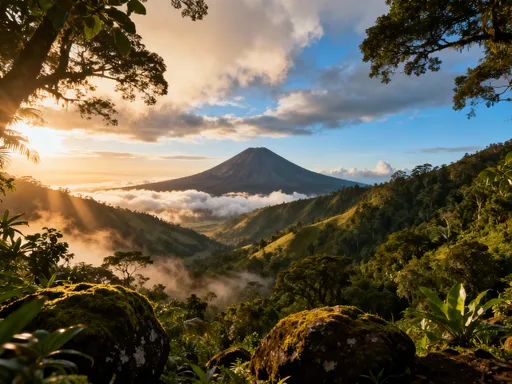
Touching down at Lombok International Airport feels like stepping into a different rhythm of life. Unlike its bustling neighbor Bali, where tourist traffic hums through narrow roads and resort-lined coastlines, Lombok greets visitors with open skies, quiet lanes, and the scent of frangipani carried on a gentle breeze. The drive from the airport to the central highlands reveals a landscape shaped by time and tradition—rice paddies stitched in emerald rows, water buffalo resting beneath banyan trees, and women seated outside their homes, fingers moving deftly across wooden looms.
What strikes you first is not the scenery, though it is breathtaking, but the sense of presence. Life here unfolds at a pace that feels intentional, not rushed. There are no aggressive touts or crowded markets. Instead, you meet quiet smiles, eyes that hold a deep calm, and a community that moves with the confidence of those who know who they are. This is Sasak country—the ancestral heartland of Lombok’s indigenous people—and their way of life remains central to the island’s identity.
Even in the most remote villages, there’s a dignity in the simplicity. Houses are built from local materials—thatched roofs, bamboo walls, and woven palm floors—yet they radiate warmth and pride. Children wave from doorways, elders nod respectfully, and the air hums with the quiet industry of daily life. Lombok does not feel staged for outsiders. It feels lived-in, real, and refreshingly unpolished. For travelers seeking more than sun and sand, this authenticity is the first gift the island offers.
Sasak Culture: The Heartbeat of Lombok
The soul of Lombok lies in its people—the Sasak, who make up over 85% of the island’s population. Their history stretches back centuries, shaped by a unique blend of animist beliefs, Hindu influences from Java, and later, Islam introduced through trade and spiritual migration. Unlike in many parts of Indonesia where modernity has diluted tradition, the Sasak have preserved their cultural fabric with quiet determination. Their customs are not museum pieces; they are living threads woven into everyday life.
One of the most striking aspects of Sasak society is its village-based governance. Each hamlet is led by a Kepala Dusun, or village elder, who plays a crucial role in maintaining social harmony, resolving disputes, and safeguarding cultural practices. These elders are not elected in the Western sense but chosen based on wisdom, integrity, and deep knowledge of local customs. Their authority is respected not through power, but through trust—a system that has endured for generations.
Religious life among the Sasak is equally layered. While most identify as Muslim, their practice varies significantly across three main subgroups: Waktu Lima, who follow orthodox Islamic prayer times; Waktu Telu, who blend Islamic rituals with ancestral traditions and pray three times a day; and the Pande, a small community known for metalworking and a more syncretic spiritual path. This diversity is not a source of tension but a testament to Lombok’s long-standing tradition of religious tolerance.
In many villages, you’ll see mosques standing peacefully beside rice fields where ancestral rituals are still performed. Ceremonies often begin with Islamic prayers, followed by offerings to the land and ancestors—a seamless integration of belief systems that feels natural, not forced. This spiritual harmony is not unique to Lombok, but here, it is lived with a quiet confidence that invites reflection. To witness it is to understand that culture is not static; it is a living, breathing entity shaped by time, place, and collective memory.
Traditional Weaving in Sukarara: Threads of Identity
No journey into Sasak culture is complete without a visit to Sukarara Village, a hillside community renowned for its handwoven textiles. For over 400 years, women here have passed down the art of songket and ikat weaving, creating intricate patterns that tell stories of protection, fertility, and the natural world. The process begins not in a workshop, but in the earth—roots, leaves, and bark transformed into vibrant dyes through methods unchanged for generations.
Indigo yields deep blues, turmeric produces golden yellows, and the morinda root gives a rich, rust-red hue known as marah. These natural pigments are carefully prepared in clay pots, simmered over open fires, and used to dye hand-spun cotton thread. The weaving itself is done on a backstrap loom—a simple but demanding tool that requires strength, precision, and patience. The weaver sits on the ground, the loom attached to a post in front and a strap around her waist, each thread pulled taut with her body’s movement.
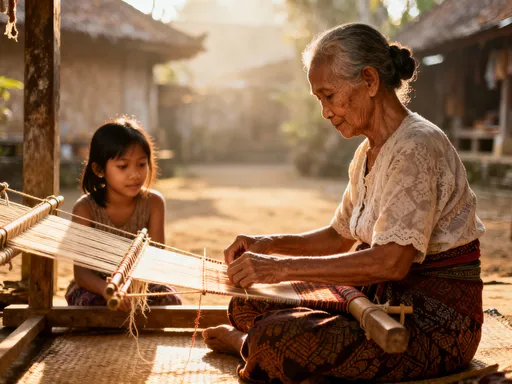
What makes Sukarara extraordinary is not just the skill, but the continuity. In one home, I watched an elderly woman guide her granddaughter’s hands over the loom, murmuring instructions in the Sasak language. The girl’s fingers were small, but her focus was intense. Each pattern had meaning: a zigzag for lightning and protection, a diamond motif for the eyes of the guardian spirit, a spiral for the cycle of life. These are not decorative choices—they are symbols of identity, woven into cloth that will be worn at weddings, births, and funerals.
Visitors are welcome to observe, ask questions, and even purchase textiles directly from the weavers. This direct exchange is vital. Unlike mass-produced souvenirs sold in tourist zones, these pieces carry the weight of heritage. Every purchase supports a family, sustains a craft, and honors a tradition at risk of fading in the face of modernization. In a world of fast fashion, Sukarara reminds us that true value lies not in speed or scale, but in the slow, deliberate act of creation.
The Dance of Fire: Randai and Peresean Performances
One evening, in a village square lit by kerosene lamps, I witnessed a performance that sent chills down my spine. Young men, bare-chested and painted with sacred symbols, faced each other in pairs, gripping bamboo sticks and small wooden shields. The air pulsed with the rhythm of hand-played drums, deep and primal, as they began the Peresean—a traditional warrior dance that once served as both martial training and spiritual protection.
The movements were sharp, synchronized, and charged with energy. Each strike of the stick echoed like thunder, yet there was no aggression—only discipline, unity, and reverence. The dancers chanted in unison, their voices rising in ancient verses believed to invoke ancestral strength. I later learned that Peresean originated as a means of conflict resolution between villages, a way to settle disputes without bloodshed. Today, it is performed during festivals, harvest celebrations, and rites of passage, preserving the spirit of honor and community.
Another form of cultural expression, Randai, blends dance, martial arts, and storytelling in a theatrical performance often held during the harvest season. Performers, both male and female, move in fluid patterns, enacting folk tales that teach moral lessons and celebrate local heroes. The narratives are passed down orally, and the music—featuring gongs, flutes, and drums—creates an immersive experience that transcends language.
What makes these performances so powerful is their authenticity. They are not staged for tourists on a schedule, but performed when the community calls for them. Attendance is by invitation or quiet observation, and photography is often limited out of respect. To witness Peresean or Randai is to be reminded that culture is not entertainment. It is memory, identity, and a living dialogue between past and present. These dances are not just art—they are acts of preservation, performed with pride and purpose.
Pura Meru and Islamic Harmony: A Unique Spiritual Blend
In the heart of Mataram, Lombok’s capital, stands Pura Meru, the island’s largest Hindu temple. With its seven-tiered meru towers and intricately carved gates, it is a masterpiece of Balinese-influenced architecture. Yet what makes Pura Meru remarkable is not just its beauty, but its context. Just a short walk away, the call to prayer echoes from a grand mosque. This proximity is not accidental—it is symbolic of Lombok’s quiet but profound interfaith harmony.
Hindus make up a small minority in Lombok, primarily descendants of Javanese and Balinese settlers. Yet their presence is respected, their festivals celebrated, and their places of worship protected. During major Hindu ceremonies like Galungan or Nyepi, Muslim neighbors often help with preparations, offering space for processions or assisting with logistics. In return, Hindus participate in Muslim celebrations like Eid, exchanging greetings and sharing meals.
I visited Pura Meru during a morning ceremony. The courtyard was serene, filled with the scent of incense and the soft rustle of palm leaves. Women in traditional attire placed offerings of flowers and rice cakes at the shrines, while priests chanted in Old Javanese. Later that day, I passed by the nearby mosque during Friday prayers and saw the same sense of devotion, the same deep connection to the sacred.
What struck me most was the absence of tension. There were no barriers, no guarded expressions. People moved through each other’s spaces with ease and respect. This coexistence is not legislated or enforced—it is cultural. It grows from generations of shared history, mutual support, and a collective understanding that faith is personal, but community is shared. In a world often divided by religion, Lombok offers a quiet lesson: harmony is possible when respect is rooted in daily life.
Village Homestays: Living Culture, Not Just Observing It
One of the most transformative experiences in Lombok is staying in a traditional village homestay. In Sade Village, I spent three nights in a lumbung—a raised rice barn converted into a simple but elegant guesthouse. The structure was built entirely from natural materials: bamboo walls, thatched roof, and a floor of woven palm leaves. There was no electricity, no Wi-Fi, no running water. Instead, there was a kerosene lamp, a pitcher of cool well water, and the sound of crickets at night.
Life followed the sun. I woke at dawn to the call of roosters and the sight of women preparing offerings at family shrines. Breakfast was simple—boiled eggs, rice, and fresh papaya—but eaten with hands, as is customary, and shared with the host family. We communicated through gestures, a few words of Bahasa Indonesia, and plenty of smiles. By the second day, I was helping fetch water, peeling vegetables, and learning to fold banana leaves for cooking.
In the evenings, we sat together on the porch, sipping sweet tea as the family shared stories of their ancestors, their land, and their traditions. One night, I joined them in preparing ayam taliwang, Lombok’s famous spicy grilled chicken, marinated in a blend of garlic, chili, and shrimp paste. The heat was intense, but the flavor unforgettable. Eating with my hands, I felt a connection I had never experienced in a hotel or resort.
These homestays are more than accommodations—they are cultural exchanges. They provide income for families, reduce reliance on outside tourism operators, and reinforce pride in traditional ways of life. For visitors, they offer a rare opportunity to slow down, listen, and participate. You don’t just see the culture; you live it, breathe it, and carry it with you long after you leave.
Traveling Responsibly: How to Engage Without Exploiting
As Lombok becomes more accessible, the challenge is to grow tourism without erasing the very culture that makes it special. The island’s authenticity is its greatest asset, but it is also fragile. The difference between respectful engagement and cultural exploitation often comes down to intention and awareness.
One of the simplest yet most important rules is to ask before taking photographs, especially during rituals or in private homes. A smile and a gesture can go a long way. Dressing modestly—covering shoulders and knees—when visiting villages or religious sites shows respect and helps you blend in. Learning a few basic phrases in Sasak or Bahasa Indonesia, such as “Terima kasih” (thank you) or “Boleh saya lihat?” (may I look?), opens doors and builds trust.
Another powerful way to travel responsibly is to hire local guides. They do more than translate—they provide context, share stories, and ensure that visits are conducted with cultural sensitivity. Their income supports families and encourages younger generations to value their heritage. When you walk through a village with a guide who grew up there, the experience shifts from observation to connection.
Equally important is patience. Some moments cannot be rushed. A weaving demonstration may take hours. A ceremony may begin late. A family may not invite you in right away. These are not inconveniences—they are signs of a culture that values authenticity over performance. When travelers slow down, listen more than they speak, and accept that they are guests, they create space for genuine exchange.
Responsible tourism is not about perfection. It is about mindfulness. It is choosing to buy a handwoven scarf directly from the artisan rather than a factory-made replica. It is declining a photo if someone seems uncomfortable. It is understanding that culture is not a backdrop for your Instagram feed, but a way of life to be honored.
Conclusion
Lombok’s true magic isn’t in its untouched beaches or volcanic hikes—it’s in the quiet moments of human connection, the rhythm of ancient crafts, and the resilience of tradition. This island doesn’t perform culture; it lives it. From the first greeting in a village to the final sip of sweet tea under a starlit sky, every experience carries the weight of history and the warmth of community.
What I discovered in Lombok was not just a destination, but a different way of being. A way that values patience over speed, presence over possession, and respect over consumption. In a world that often feels fragmented, Lombok stands as a reminder that harmony is possible—not through grand gestures, but through daily acts of kindness, tradition, and shared humanity.
By choosing to travel with curiosity and care, we don’t just see another way of life—we honor it. We become part of a story much larger than ourselves. And in doing so, we discover not just a place, but a deeper sense of our own humanity. Lombok doesn’t just change how you see the world. It changes how you see yourself.